
The central bank has advised banks and financial institutions to 'seriously and promptly consider initiating criminal action against willful defaulters, wherever necessary, based on facts and circumstances of each case."

The Reserve Bank on Monday asked banks to notify the base rate, or the minimum lending rate, at least once in every three months.

To cut interest rates, the central bank head has to open up a debate on inflation target revision.

State industries minister Uday Samant and party leader Ramdas Kadam gave information about the resolutions passed in the meeting.

The banking sector in India is reeling under Rs 8 lakh crore of non performing assets (NPAs) or bad loans, of which PSU banks alone account for over Rs 6 lakh crore.
The Reserve Bank of India may go in for further tightening of money supply as there is no likelihood of inflation coming to single digit in the next six months, according to indications given by the central bank governor to a parliamentary panel.
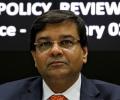
Market participants must appreciate that staying cautious is a virtue for central bankers and should not expect a sudden reversal in the formal monetary policy stance.

The monetary authority said it was worried on three fronts with regard to inflation as well as the economy.
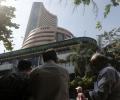
Financials emerged as the top gainers while auto shares rallied on robust September sales

Domestic macroeconomic data, RBI policy and developments related to the Russia-Ukraine war would be major driving factors for the stock market this week, analysts said. Moreover, FPI investment and trends in crude oil would also influence the trading sentiment, they added. "This week, the RBI credit policy will be a critical factor for Indian markets.
.jpg)
Industry's demand for a reduction in the repo rate, currently 8 per cent, has gained momentum after wholesale and retail inflation eased in February.

Will Arundhati Bhattacharya be the RBI's first woman governor? Or will Urjit Patel succeed Raghuram Rajanas RBI governor when his term ends on September 4?
A selection committee, headed by Reserve Bank of India (RBI) Governor D Subbarao, is scheduled to meet next week to shortlist candidates for the post of the deputy governor of the central bank.

From the Sensex pack, Bajaj Finance, Bajaj Finserv, Reliance Industries, Wipro, HDFC Bank, HDFC, ICICI Bank and Tata Steel were the major laggards. ITC was the lone winner in the Sensex pack.
Focus on inflation, higher CPI projection dampen bond market mood.

The Reserve Bank on Monday pitched for creation of a conducive environment for investment and faster clearances of projects to boost economic growth which slowed to a decade low of 5 per cent in the previous fiscal.
The Reserve Bank will take some action by this month end after consultations with the Indian Banks' Association.\n

Rising crude oil prices, traction in China equities and inflation concerns back home are casting a shadow on the Indian equity markets in the short term, believe analysts at Jefferies. They said this could see the markets remaining range-bound in the near term before the next leg up.

'If the RBI now only prints Rs 100 in small denomination notes and the remaining amount is printed in Rs 500 and Rs 2,000 denominations, then by March-end the central bank can completely normalise the cash crunch situation.'

Most central banks across the world have around 5-7 years of tenure for the governor and deputy governors.

'There is no difference between the earlier government and the present government.' 'They are all following the economic policy based on the Chicago School of thought.' 'This school of thought says the government should have very little role in governing the country and the majority of the work should be handed over to the private sector.' 'This has not succeeded in the US.' 'Yet, it is being tried here by people like Arvind Subramaniam, Arvind Panagariya, Urjit Patel and Raghuram Rajan.'

Banks argued that loans of most lenders are funded primarily by retail deposits and not from the wholesale market as was the practice abroad

The finance minister chided the central bank on Tuesday over its focus on fighting inflation, saying the Reserve Bank of India (RBI) also needed to abide by the government policy to promote economic growth.
An initial reading of the guidelines indicates two factors - potential rise in borrowing cost and lower returns on investment book - could hit the spread of NBFCs.

The RBI refuses to classify a cryptocurrency as an asset since it doesn't have future cash flow and its value is always fluctuating because of speculation. There is also no consumer protection, observes Tamal Bandyopadhyay, and hence the e-rupee trial run.
The committee is considering multiple BPLRs for corporates, SMEs and retail borrowers and is likely to meet by mid-September to finalise the recommendations on the BPLR structure. BPLR is the interest rate that commercial banks charge their most credit-worthy customers.

Meanwhile, RBI Governor Raghuram Rajan said at the meeting that the central bank brass discussed strengthening the state- level coordination committees so that unauthorised deposit taking can be dealt with in a better way.

The Reserve Bank of India (RBI) plans to impose stricter limits on how much a bank can lend to a single corporate group, a move aimed at curbing risk in the banking sector at a time when bad loans are on the rise.

'The CM kept his cool, but his adviser was liberal with filthy language.' Tamal Bandyopadhyay recreates the diary of a general manager in a public sector bank, providing a glimpse of how they balance their work and life.
To contain rising bad loans, the Reserve Bank on Tuesday proposed a slew of measures, including incentives to lenders for coming together and tackling an account timely and penalising borrowers with higher interest rates in future for not cooperating for a resolution.

As inflation rate is near the upper limit of the comfort zone, experts rule out rate cuts anytime soon
It further pointed out that the twin balance sheet problem -- at the end of banks and corporate -- more attractive interest rates for borrowers in the bond market and from non-banking financial institutions are other reasons for slow bank credit growth.

Issuance of new bank licences proves that the apex bank wants the financial sector to flourish.

Will help to reduce imports of the metal.

The Indian services sector activity fell to a six-month low in September, as new business inflows rose at the slowest rates since March, amid inflationary pressures and competitive conditions, a monthly survey said. The seasonally adjusted S&P Global India Services PMI Business Activity Index fell to 54.3 in September, from 57.2 in August, highlighting the weakest rate of expansion since March. For the fourteenth straight month, the services sector witnessed an expansion in output. In Purchasing Managers' Index (PMI) parlance, a print above 50 means expansion, while a score below 50 denotes contraction.

Banks do extensive investigation before declaring an account fraud; they owe it to us as they deal with our money. Why would they try to fix an innocent borrower? asks Tamal Bandyopadhyay.
Banks normally park almost 27 per cent of their funds in government securitie.
The Reserve Bank of India is likely to cut policy rates by 0.25 per cent and keep the cash reserve ratio unchanged at its policy review next week, on the back of slower-than-expected growth and more encouraging inflation readings, says a report by HSBC.

It is the six per cent target RBI is more concerned about.

The increase reflects a quarter-on-quarter increase of 2.6 per cent in October-December 2022-23. In absolute terms, the total liabilities, including liabilities under the 'Public Account' of the government, jumped to Rs 1,50,95,970.8 crore at the end of December 2022.
 © 2026 Rediff.com - Advertise with us - Disclaimer - Privacy Policy - Sitemap - Feedback - About us - Terms of use - Grievances